Showing posts with label 2016: Wood Land School. Show all posts

August 6, 2016

Thank you Wood Land School!

Beautiful gift from Fallon Simard, Wood Land School participant

Thank you to the participants and faculty of the Wood Land School. It was such honour to have the Wood Land School at Plug In ICA for the last few weeks, and we are so much looking forward to working alongside Jaimie Isaac, Duane Linklater, and the Wood Land School artists in the future. 


August 5, 2016

Wood Land School Open Studio and Exhibition

This afternoon marks the final day of the Wood Land School, and we are closing the 2016 Summer Institute with an open studio and exhibition. Congratulations to all of the participants of the Wood Land School!


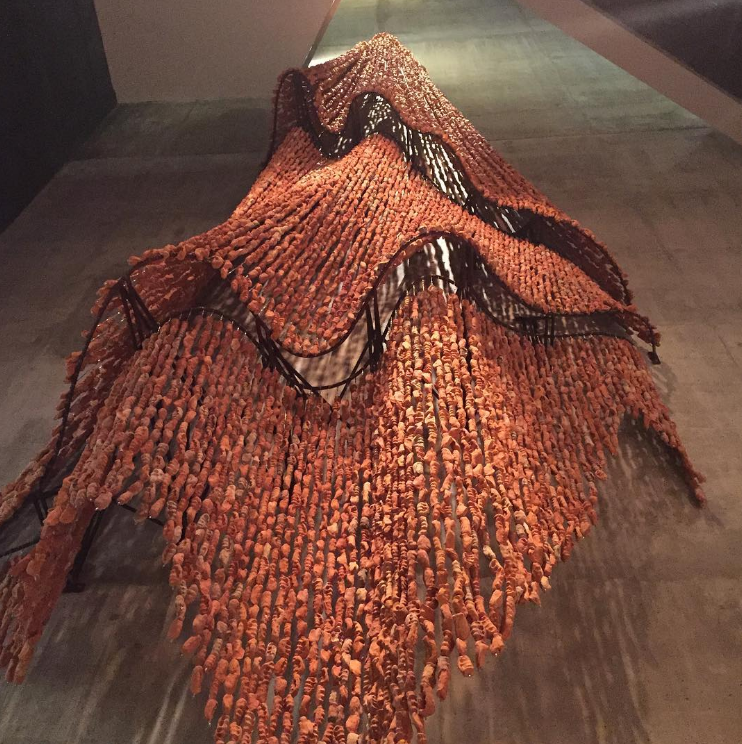
Lita Fontaine


The creation of the dress for Thunderbird Woman followed the thematic address of the Residency of Daphne Odjig artwork, Thunderbird Woman. During this residency I did research on the Thunderbird Woman of the Anishinaabe (Ojibwa).  The Thunderbird is the symbol of the Anishinaabe.  It is revered as the most powerful of all Manitous (spirits), equal to Kitchi-Manitou, the Creator, also known as ''the Great Mystery".

Throughout this residency during research, I had seen her in several forms. One example is the major storm that Winnipeg had pass during the Wood Land School. She was very powerful that evening, that had spawned a Tornado.  The Thunderbird also appeared symbolically in several forms, such as seeing a Red Thunderbird convertible, a beauty for sure;  A subliminal message indicating that the time was right to create her spirit. 
In addition, there were many readings that had appeared on several Facebook pages and I even bumped into a female friend whose namesake is Thunderbird woman as well.  It would seem that the timing was right for the creation of the dress and many outside influences assisted me to create and sew one for her. 

I was honoured to be selected by two wonderful curators and staff of Plug In Institute for this residency. I felt very welcomed and I would like to graciously thank all participants in this endeavour and am hoping many more will come into fruition that will assist all artists to pursue further their creative spirit. 

Lita Fontaine


Jamie Black
Lean To is a durational performance produced by Jaime Black while in residence at Plug In Institute of Contemporary art for the Wood Land School: Thunderbird Woman, facilitated by Duane Linklater and Jaimie Isaac. The performance will take place in the context of the Wood Land School Open Studios and Wrap Party on the Plug In Institute of Contemporary art Rooftop. 
Building on her recent photo series, Conversations with the Land, Black invites viewers to imagine the possibilities for decolonizing institutional spaces through the incorporation of land-based practices. Lean To centres on themes of cultural memory, focusing on the power of community, connection, and ceremony to foster resilience.

Jamie Black, Lean To

Jamie Black, Lean To (Performance)

Lindsey Bond

Lindsey Bond is presenting in-progress work inspired by Daphne Odjig's Thunderbird Woman titled Bridge Meditations: following women and birds across rail bridges in Winnipeg.  The photographic and video work created during Wood Land School, follows the movement of women and birds across bridges opening up a conversation about de-colonization, safe and sacred spaces and re-contextualizes daily movement. Lindsey is also investigating walking as a methodology that begins to access and question her experience of the land. 

Lindsey Bond's lens-based work explores socio-geographic issues in Canada. As a third generation Canadian, she creates pervasive imagery through a settler lens, exposing our need to reconnect with the ground we live on. Bond works with a photo-documentary ethic as a lift-off point to create street level photographic and postcard installations, books and video. Bond’s practice has begun to focus on collaborations and alliances between indigenous and settler communities to further investigate Canadian perception of space, memory and identity. Current projects include: investigating the shifting ground surrounding defunct rail-lines in Manitoba, and the bridge as a metaphor for personal transformation. Lindsey received her BFA in Photography from Emily Carr University of Art + Design and studied Visual Communications in Edinburgh, Scotland. Bond’s work has been exhibited across Canada including: Gallery 44; offsite installation on King and Spadina, Toronto; Latitude 53 Contemporary Visual Culture; public transit installation in the Edmonton LRT, Harcourt House Arts Centre and The Richmond International Film + Media Arts Festival.


Lindsey Bond, Bridge Meditations: following women and birds across
rail bridges in Winnipeg
(Installation view)


Kristin Flattery and Danielle Fenn

Kristin Flattery and Danielle Fenn collaborated to produce new work for the Wood Land School residency. Both women are of First Nation and European ancestry and strive to explore their integral history and identity that was denied to them growing up.

Fenn has a piece of artwork in the Manitoba Governments Permanent Collection dealing with her Cree and Scottish bloodlines. Fenn’s work focuses on reinserting personal voice into institutional narratives and the concept of emotional labor. Much of Flattery’s work involves issues involving missing and murdered indigenous women and girls as well as politics about pollution resource extraction and exploitation. Flattery’s art has been featured on large wall murals at the University of Manitoba’s campus and featured in Red Rising magazine. Fenn and Flattery felt these issues would be a firm starting point for developing a concept as they are both frustrated with the industrial medical complex and how the Canadian government has failed to properly honour the treaties or issue an inquiry for missing and murdered Indigenous women and girls. For First Nation peoples, treaties have always been about creating relationships of balance and harmony where as the government looks at our treaties strictly as land claims and economical mechanisms for producing monetary gain.

For the Wood Land School residency Fenn and Flattery traveled to this specific site to perform a healing ceremony and examine a traditional Indigenous harvesting migratory route that has been disrupted due to construction of a man made dam. Flattery and Fenn felt it was profoundly necessary to document this once abundant resource through photographic imagery and video. Through studying ancestral migratory route the artists learned there was more then just wild rice that was gathered at this location, but blueberries, raspberries, birch bark, wicai, and other medicinal plants as well. Eagles use to flock in abundance but due to mercury contamination this sadly is no longer the case. The artists documented the land and water as well as staged a performance of peaceful rebellion. The injustices of what humans are doing to the land can be closely related to the injustices of how we treat our women. Flattery and Fenn also carried with them a HBC blanket Fenn had beaded with trinkets in honour of the women coerced into the sex slave trade across the great lakes. Fenn herself has been victimized through sexual violence and the act of learning to smudge and bless the blanket was a poignant metaphor for her own trauma.

When installing “Sisterhood, Blood Memories, and our Relationships to the Land and Water,” we couldn’t help but think about the Haudenosaunee’s Wampum belt and what this belt represents. The wampum belt portrayed the paths of two canoes traveling down the river leaving two equal trails. The white beads of the wampum signify peace while blue relates messages of a more serious or political matter. The wampum was used for official purposes as well as spiritual ceremonies and also as a way to bind peace through joining the League of Nations.

The relationship of this land and body of water has not been fully respected and therefore a relationship of tension has been the outcome. Due to this tension there has been a divide created between the Indigenous and non-Indigenous communities creating two unequal disrupted paths. Instead of the wampum’s calm blue and white hues the artists chose to split bright red fabric to represent the two disrupted paths that hung from unequal tree branches creating an Indigenous theater for our video of protest against the atrocities done to our land and water systems. The branches create an arrowhead to signify this ongoing and infinite issue. However, the artists do believe a positive outcome can one day be reached so the artists sat contently mending skirts in hopes to mend such relationships through their own personal labors.

Our land is scared, she is living, she is nurturing, however, if we don not do our part to care for her, all that is good and nurturing will be taken away from us. Reconciliation is a vital concept when exploring Indigenous content in art. However, it is a term some First Nation artists such as Robert Houle are suspect of for it is rooted in Christian’s concept of forgiveness. Robert Houle was about something more than forgiveness. To “let it go from the mind” is a self determining act, while forgiveness, is an act of submission. The question that Fenn and Flattery are aiming to explore in this new work is how to heal without falling into the submissive posture Houle is wary of. They believe the answer is in creating and performing non violent but potent and powerful work.


The Wood Land School was an incredible experience. We feel very blessed and honoured to have created such meaningful relationships with all our peers as well as our mentors Jaimie Isaac and Duane Linklater. We cannot thank the school enough for taking us on all these wonderful behind the scenes and sneak peak tours of important exhibits here in Winnipeg.


Danielle Fenn and Kristin Flattery, Studies in sisterhood, blood memory, and our relationship to the land (Performance)

Danielle Fenn and Kristin Flattery, Studies in sisterhood, blood memory, and our relationship to the land (Installation view)


Phoenix Thomas

The installation; This isn't a Spill, It's Cut Grass, is a mental map of responses and investigations that I pursued in my time at the Wood Lands School, I wanted to recreate an in studio look of how I'd go about creating art, with notes and inspiration scrawled and tacked to the wall. I focused my effort on 3 primary topics to create work; Dionysus, The Bystander Effect and Why Die For Danzing.

My intention with Dionysus, the Greek god of wine and consumption was to inject an alternate mythology into the problem of alcohol dependency. I have seen several family members and myself turn to alcohol and other substances to cope with problems and had sought to undercut the tragedy of the situation by evoking the idea, that we were just praying to Dionysus. Positing empty promises that he could; 'heal the sick, cure the blind, Dionysus-Dionysus.' Hoping to engage a dialogue about this issue without being entirely transparent about it. 

With The Bystander Effect and Why Die Danzing, I wanted to put these two concepts in proximity of the workshop and my own practice to expand on and create commentary between all the issues our talks approached. The Bystander Effect being a situation in which multiple people observe a crisis and due to the presence of other observers, personal responsibility becomes so diffused amongst the bystanders that no single person takes action. And 'Why Die for Danzing' was a French World War 2 anti war sentiment, that proposed appeasement over fighting for a territory owned by Poland. I had found the two sentiments indicative of how Indigenous issues are handled in North America. Proposing that perhaps responsibility is being diffused amongst everyone and then no one helps or they 'other' Indigenous people and make it not their problem. 


Phoenix Thomas, This isn't a Spill, It's Cut Grass (Installation View)

Phoenix Thomas, This isn't a Spill, It's Cut Grass (Installation View)

Phoenix Thomas, This isn't a Spill, It's Cut Grass (Installation View)


Emilie St. Hilaire


This work was inspired by the conversations and shared experiences that occurred during the 3 weeks of Wood Land School.


“There are spaces that remain uncolonized.”
Exchanging knowledge
Sharing cultural practices
Generosity
Understanding
Personal narrative
Taking care


Emilie St. Hilaire, Naming is seeing, feeling is knowing


Stephanie Duran Castillo


Naturalis Historia (momento temporis
Video

Naturalis Historia (momento temporis) joins human and non-human imagery into one fabric that favors the interrelation of all present actors. The video plays pretention of universality and at the same time introduces aliments produced by modernity such as ethnographic film and encyclopedic knowledge. A ritualized consumption of such aliments is strangely celebrated, turning Naturalis Historia in an act of joyful anthropofagia. 

Il représentait un serpent boa qui digérait un bibliothèque
Installation 

The present installation portrays through the act of ritual consumption, the political remnants of modernism and the uprising of alternative modes of thinking. Weaving between anthropology, humanism and ecology, the installation discusses the free circulation and consumption of knowledge and emotionality promoted from the hegemonic cultures constitute a source of aliment in the subjected societies. Modernity and its remnants (either trans/post/alter) turn into food for who feels hunger.


Stephanie Duran Castillo, Il représentait un serpent boa qui digérait un bibliothèque (Installation view)


Jillian McDonald


In these works in progress, I was interested in transformative and haunting aspects of nature, sometimes suggesting environmental holocaust. I redrew birds after Audubon's nature paintings, removing them from his observational view of nature and re-configuring them in a swarm that references horror film; drew beached whales from Google searches; re-edited footage from a swim in Lake Winnipeg to reveal something unfamiliar appearing in the water; and filmed a lightning storm with an app that remaps time. 


Jillian McDonald, Something in the Water, Lake Winnipeg; Dead Whales; Birds, after Audubon and Hitchcock; Dark Cloud


Julia Anne Leach

In Desire Lines, a site-specific dérive, I work with the raw, ephemeral aspects of experience by turning to the feral dogs of Sioux Valley Dakota Nation. Deep in the night, in a multipolar world, I drift alongside two wild animals — at once both involved and separate.


Fallon Simard


Fallon Simard, Connected to air (installation view)

Fallon Simard, Connected to air (video still)


August 4, 2016

Wood Land School on CKUW 95.9 FM!

Listen in! Wood Land School faculty and participants are about to be interviewed on CKUW 95.5 FM in Winnipeg, on Eat Your Arts and Vegetables.

Archive of the interview is available here:
http://station.ckuw.ca/24/20160804.17.30-18.00.mp3 


WAG curator tour with Jaimie Isaac

What a pleasure it was to have Wood Land School faculty Jaimie Isaac provide the participants with a curator tour of her exhibition Qua'yuk tchi'gae'win: Making Good at the Winnipeg Art Gallery. With work in the collection, it was a special opportunity to have Winnipeg based artist Lita Fontaine, who is a participant in the Wood Land School, present during the tour to talk to us about her work.

Image by Duane Linklater (via Instagram)

August 3, 2016

Manitoba Museum vault visit with Sherry Farrell Racette


Wood Land School visits Manitoba Museum. Photo by
Duane Linklater (via Instagram)

This afternoon the Wood Land School faculty and participants had the opportunity to visit the Manitoba Museum and its vault, alongside scholar and author Sherry Farrell Racette. Prior to the visit, the group discussed the ways in which institutional terminology can directly impact a viewer's perception of museum-held items, artifacts, and works of art. The concept of recognizing indigenous historical objects as works of art as opposed to historical artifacts is one that has been largely developed in recent curatorial projects, notably including Jaimie Isaac's exhibition at the Winnipeg Art Gallery We Are On Treaty Land (2015-16). Thank you so much Sherry for the tour! 
Daphne Odjig mural at the Manitoba Museum. 

This mural by Indigenous Candian artist and member of the Professional Native Indian Artists Inc (PNIAI), Daphne Odjig, in its specific exhibition place
within a museum alternatively to a gallery presents an example of the importance
of terminology in the understanding of a work of art
. 

July 29, 2016

Wood Land School visits the CMHR

Rebecca Belmore
This morning the participants of the Wood Land School were toured through the Canadian Museum for Human Rights. The faculty and participants had an important discussion of the work and curation of the museum, which included contentious topics such as the societal relevance of the museum's distinction between Treaty Land and Ancestral Land. 


Photos by Duane Linklater (via Instagram)

July 28, 2016

Curator talk with Michelle LaVallee

This morning we had curator Michelle LaVallee present a lecture on her curatorial practice and methodology, as part of a series of talks related to the Wood Land School.

Listen and view the lecture here:https://vimeo.com/177302424

Michelle LaVallee is the curator of the MacKenzie Art Gallery in Regina, Saskatchewan, and has curated numerous exhibitions including the nationally touring exhibition 7: Professional Native Indian Artists Inc., which was the first large-scale exhibition and publication focused on the PNIAI. The exhibition, which finished it's tour at the Art Gallery of Alberta in Spring 2016, aimed to bring to contemporary view the work and national importance of the first self organized artist collective to push for the recognition of contemporary indigenous art. The far-reaching scope of LaVallee's exhibition and monograph has proven to become a critical resource of the groups history, impact, and current contextualization. LaVallee discussed her consideration of the collective artistic impact of the group in addition to the distinctive styles and experimentations of the individual artists. LaVallee also explained some of the concepts behind the exhibition, including the ideas of artist as story teller and an exploration of ways that exhibitions and institutional spaces can be used as places for critical discussion and community action. 


LaVallee's curatorial interests around story telling, art object as living object, and the capabilities of the exhibition space have continued to be prevalent in her work, including the exhibition Moving Forward, Never Forgetting, which was held at the MacKenzie Art Gallery in 2015. This exhibition presented works from both Indigenous and non-Indigenous artists, and strived to assist viewers in the engagement with emotional issues related to indigeneity and the propagation of surrounding dialogue. The exhibition as platform for conversation is a key point in LaVallee's curatorial practice, and this approach can be seen in her development of many avenues for discussion in the show. During the exhibition, Story Keepers were present to assist visitors in understanding the stories behind the art works, and engage in story sharing with the viewers. Within the exhibition, gathering spaces for reflecting and discussing the works were provided to further demonstrate the importance of dialogue. 

Throughout her accomplished career as a curator, LaVallee's work focused on the ways that exhibitions can respond to current conditions and help to progress the gallery space as a site of story telling and community engagement has played a large role in the development of spaces and exhibitions which have and will continue to resonate with those who engage with them. 


July 27, 2016

Curator talk and workshop with Julie Nagam

Screenshot from Julie Nagam's online project white pines lay over the water, see: http://www.vozavoz.ca/artists/#julienagam

This morning we were honoured to have Julie Nagam present a talk on her curatorial practice and writing. She lead an informal discussion with the faculty and participants of the Wood Land School on her research, which takes up the canoe as Indigenous methodology. Believing in the importance of embodied knowledge, Nagam had planned to take the group out on the water for a paddle. Unfortunately the water levels made this impermissible. 

The talk took an intimate format, beginning with introductions around the table, where we were joined by other members of the arts community including artist Dayna Danger who stopped in during her visit from Montreal. After introductions, Nagam shared how she developed her research around the canoe while attending university in Toronto as a way to connect with the territory there, and a response to the relative lack of Indigenous visibility in the dense urban space. She spoke of the canoe as transforming and transformative, putting Indigenous peoples at the forefront of conversations about colonialism and sovereignty: without the canoe no one could get around. Furthermore, the canoe can be understood as a metaphor for sovereignty because we can all be together in a canoe, but Indigenous people are leading the procession. This, she explained is very different from reconciliation.

After presenting her rich work with the canoe, Nagam asked those present to share any methodologies they drew inspiration from. This engendered meaningful conversation and knowledge exchange, including some discussion about how Indigenous methodologies are still heavily underrepresented in university methodology courses. 


Following the workshop with Julie Nagam, the Wood Land School was joined by other members of the Winnipeg arts community, including artist KC Adams, and artist-curator Niki Little. Everyone shared lunch provided by Feast, and enjoyed the sun and conversation on the Plug In rooftop patio. It was lovely to have so many people come be a part of the Wood Land School!

July 26, 2016

The Exiles (1961) by Kent MacKenzie


This morning the Wood Land School faculty and participants viewed a screening of Kent MacKenzie's 1961 film The Exiles. The film, which was named to the National Film Registry for its cultural and historic significance, discusses indigeneity in twentith century America through the story of a group of young indigenous men and women living in Los Angeles in the 1950s. 

The Exiles (1961) screening at Plug In ICA. Photo by Duane Linklater

July 22, 2016

2016 Plug In ICA Summer Party!

Yesterday evening we were happy to host the 2016 Plug In ICA Summer Party, the opening reception for The State, Plug In ICA's current exhibition featuring work by Duane Linklater, Christian Jankowski, Maryam Jafri, and Vahap Avsar, and the Wood Land School: Thunderbird Woman

In addition to the celebration of the current exhibition and the Wood Land School, Darryl Nepinak's It's the Norval Morrisseau, Jackson Beardy, Carl Ray, Eddie Cobiness, Daphne Odjig, Joe Sanchez and Alex Janvier Show, 2011, was screened. 


Thank you to all who attended, we had so much fun! 


See more photos from the evening here! All photos by Joseph Visser


July 21, 2016

Curating as Kitchen Table Talk

Installation view, Rockstars & Wannabes, 2007 (Urban Shaman Gallery)


Curating as Kitchen Table Talk
Curator talk with Cathy Mattes


This morning we had the pleasure of listening to a curator talk with Cathy Mattes discussing her important curatorial career and current practice. This lecture was presented as a part of a series of talks related to the Wood Land School, Plug In ICA's 2016 Summer Institute. Mattes is a curator and writer based in Southwestern Manitoba, currently a professor of Visual and Aboriginal Arts at the University of Brandon, Brandon. 


Sorting beads during Curatorial talk with Cathy Mattes

Mattes' practice is rooted in generative dialogue as a propagational tool for curating. Her lecture's title, Curating as Kitchen Table Talk, refers to this methodology of curatorial work; relationships and dialogue between artists, curators, and the community are critical in Mattes' approach. Discussing her career beginnings, Cathy Mattes presented some of her early curatorial projects, including Rielisms at the Winnipeg Art Gallery, 2001, and Blanket(ed) at Urban Shaman Gallery, 2001. Mattes described the contention of the former show within the Metis community at the time, and how that has impacted the way she views her role as curator today. Mattes' curatorial work has since maintained a strong degree of tension, for example through the mixing of work by indigenous and non- indigenous artists at Rockstars & Wannabes at Urban Shaman Gallery, Winnipeg, 2009. 


Mattes' curatorial pedagogy, which places importance on communication between curator and artist played a key role in the development of Frontrunners, a show curated by Mattes in 2009 at Plug In ICA and Urban Shaman Gallery. For a year leading up to the show, Mattes explained her regular meetings with artists including Jackie Traverse and Lita Fontaine (two artists participating in the Wood Land School: Thunderbird Woman) at the Nook, a breakfast restaurant in Winnipeg's West Broadway. It was during these breakfast meetings that the concept for the show was developed, and in addition to a critical art dialogue, prosaic discussions led further to the show conceptualizing and art work production. 

Following her lecture, Mattes invited the faculty and participants of the Wood Land School among other attendees of the morning lecture including Plug In ICA staff, members of the Winnipeg arts community, and members of the general public to partake in a game of Le Twist, a variation of the game Twister she developed for Hochelaga Revisted, an exhibtion in Montreal curated by Ryan Rice. Playing Le Twist beside Dan Graham's Performance Cafe on the Plug In rooftop patio was a clear example of Mattes' curatorial approach; artists, curators, and community members engaged together sharing a real, lived experience of naturally occurring dialogue and discussion of art and indigeneity was a telling and important ending of Cathy Mattes' visit to Plug In ICA for the Wood Land School. 


Playing Le Twist with Cathy Mattes